Key Takeaways
- Most booking tools let you write a cancellation policy — very few actually enforce it automatically.
- Enforcement means: card on file at booking + automatic charge when a client cancels late, without you initiating it.
- Calendly and Acuity require manual action to charge the fee. Practice Better and HoneyBook are the same.
- Merkora is one of the only platforms that charges the late-cancel fee automatically, with no action from the practitioner.
- If you have to manually initiate the charge every time, you'll enforce it inconsistently — which makes the policy effectively meaningless.
In this article
There's a meaningful difference between a booking tool that displays your cancellation policy and one that enforces it. The first shows a paragraph of text at checkout that most clients don't read. The second automatically charges a fee when someone cancels inside your window — without you having to send a manual invoice or have an awkward conversation.
Most tools only do the first. This post covers which platforms fall into which category — and what to look for if enforcement is a priority for your practice.
What "enforcement" actually means
A fully enforced cancellation policy does three things automatically:
- Holds a payment method on file at the time of booking
- Detects when a cancellation happens inside the policy window
- Charges the late-cancel fee without requiring manual action from the practitioner
Most tools handle step one (collecting a card). Very few handle steps two and three without manual intervention. The gap is where most practitioners lose money on late cancellations.
Calendly
Calendly lets you add a cancellation policy text to your booking page. That's it. It doesn't collect a card upfront (unless you add a payment), and it has no mechanism to automatically charge a fee for late cancellations.
If you want to enforce a policy through Calendly, you'd need to manually charge through Stripe outside the platform after the fact — which most practitioners find they don't do consistently.
Verdict: Policy display only. No enforcement.
Acuity Scheduling
Acuity has more options. You can require payment or a card on file at booking. You can set a cancellation window. However, actually charging the fee when a client cancels late still requires manual action — Acuity doesn't trigger the charge automatically.
If you're disciplined about logging in and processing the fee manually, Acuity gives you the tools. If you want it to happen without your involvement, it falls short.
Verdict: Card collection yes; automatic fee charging no.
HoneyBook
HoneyBook is a client management platform (not purely a booking tool) that handles contracts, invoices, and payments together. Its cancellation policy handling is tied to the contract flow — you can specify terms, but enforcement still relies on the contract rather than automatic charge logic.
Verdict: Strong for contracts and invoicing; cancellation enforcement is contract-based, not automated at the booking level.
Practice Better
Practice Better is built for health and wellness practitioners. It has a cancellation policy feature that lets you specify a window and fee. Clients must agree to the policy at booking. However, charging the fee still requires the practitioner to initiate it manually when a late cancel occurs.
Verdict: Policy agreement at booking; fee charging is manual.
Merkora
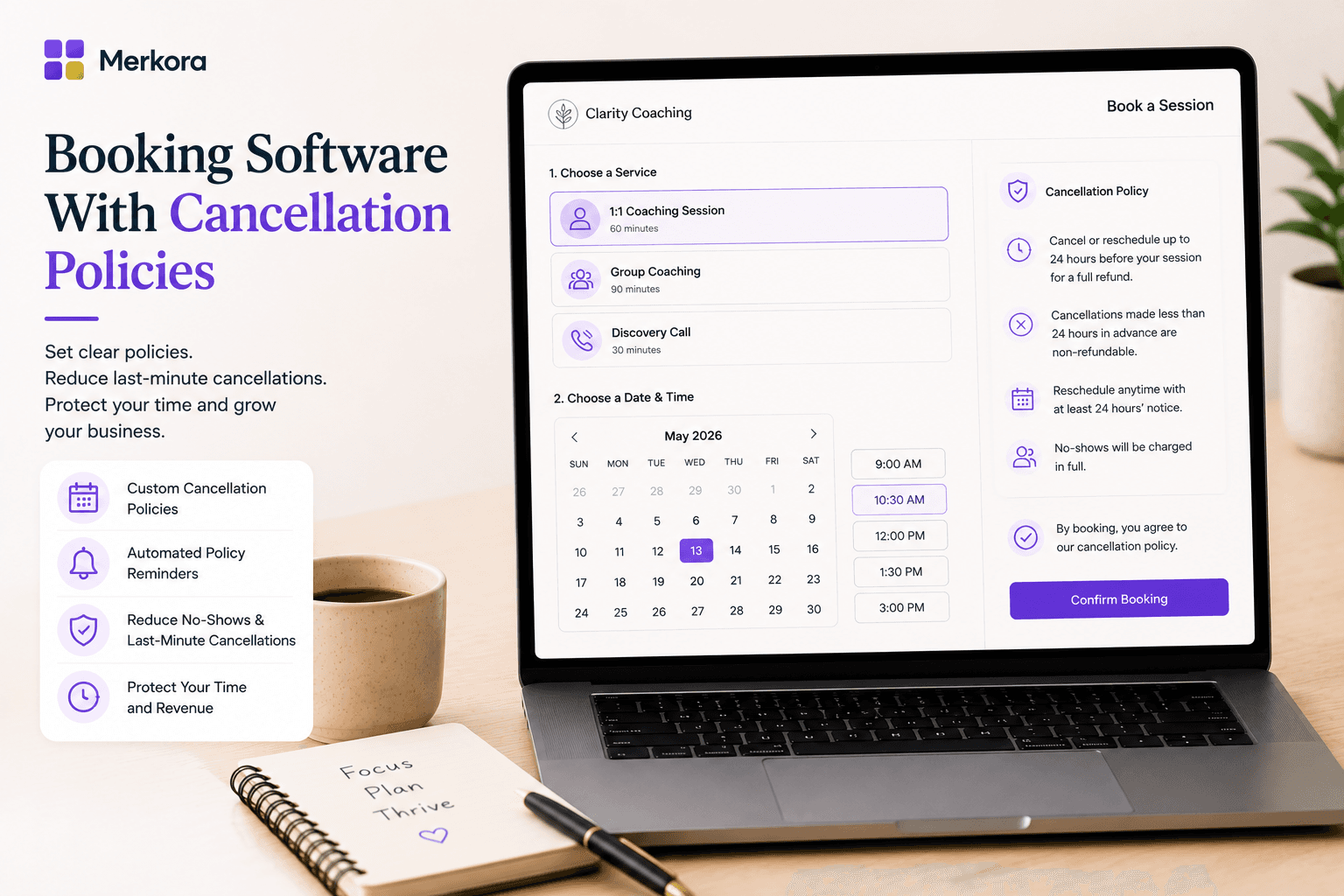
Merkora is designed so that cancellation enforcement is automatic. You set your policy window and fee percentage (or fixed amount) in settings. When a client cancels inside that window, the fee is charged automatically — no manual action required.
The logic is: if you have to manually enforce your policy every time, you'll enforce it inconsistently. Automation removes the discomfort of the conversation and makes your policy credible to clients from the moment they book.
Verdict: Full enforcement — card on file at booking, automatic fee on late cancellation.
For the broader context on why enforcement matters, see How to Avoid No-Shows as a Coach or Therapist and No-Show Policy for Therapists.
What to look for when evaluating cancellation enforcement
When a platform says it "supports cancellation policies," ask specifically:
- Does it collect a payment method at the time of booking?
- Does it detect when a cancellation occurs inside the policy window?
- Does it charge the fee automatically, or do I have to initiate it manually?
- What happens if the client disputes the charge?
If the answer to the third question is "you initiate it manually," the feature is a policy display — not enforcement. For a practice where no-shows are costing you $200–$500/month, the difference matters.
If automatic enforcement is a priority, Merkora is free to start and takes about 10 minutes to configure your cancellation policy.
Frequently asked questions
What's the difference between a cancellation policy and cancellation enforcement?
A cancellation policy is text that states what happens when a client cancels late. Enforcement is the mechanism that actually applies the fee without you having to initiate it manually. Most tools have the first. Very few have the second.
Does Calendly enforce cancellation policies automatically?
No. Calendly lets you display a cancellation policy on your booking page, but it has no mechanism to automatically charge a fee when a client cancels late. You would need to manually charge through Stripe or another payment tool.
Can Acuity Scheduling automatically charge a late cancellation fee?
Acuity can collect a card on file or require upfront payment, but it does not automatically charge a cancellation fee when a client cancels late. The practitioner still needs to initiate the charge manually.
Which booking software automatically enforces cancellation fees?
Merkora enforces cancellation fees automatically. You set your policy window and fee once, and the charge is applied when a client cancels inside that window — no manual action required.