Key Takeaways
- Written cancellation policies fail because they depend on the practitioner manually enforcing them — which happens inconsistently.
- Clients don't ignore policies out of malice. They cancel at 10pm because it costs them nothing and they've forgotten the policy text.
- The three things that actually change behavior: prepayment, automated reminders with the policy restated, and automatic fee enforcement.
- When the booking system charges the fee automatically, the awkward conversation disappears — the system did it, not you.
- Transitioning from informal to enforced policy requires one clear email to existing clients. Most accept it without pushback.
In this article
Most coaches and therapists have a cancellation policy. Most clients cancel anyway. The gap between "having a policy" and "clients respecting it" is where practitioners lose hundreds of dollars a month — and most of them know it, feel uncomfortable about it, and don't know how to close it.
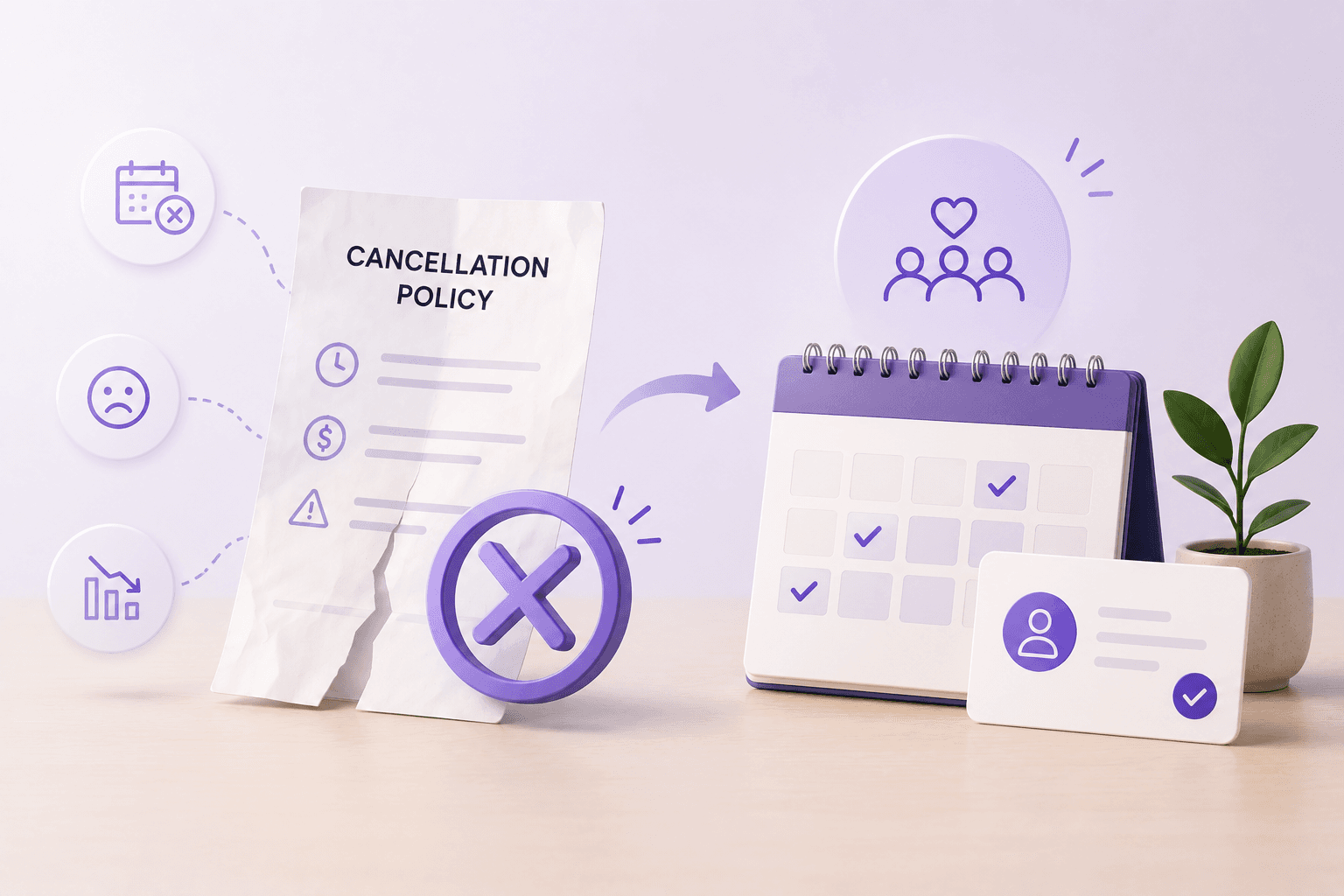
The reason cancellation policies fail is almost never that clients are malicious. It's that written policies — without enforcement mechanisms — are essentially requests, not boundaries. Here's what actually changes behavior.
The problem with written policies
A cancellation policy that exists only as text in an email or on a booking page does three things: it informs the client, it makes the practitioner feel protected, and it does almost nothing else. When a client cancels at 11pm the night before a morning session, they've almost certainly forgotten the policy text they read two weeks ago at checkout.
Even when clients do remember the policy, the absence of an automatic consequence means the practitioner has to decide whether to enforce it manually — which most don't, because the conversation feels awkward, the client is apologetic, and the relationship feels more important than the fee in the moment.
This is the core failure mode: policies that depend on practitioner-initiated enforcement will be enforced inconsistently.
What actually changes client behavior
There are three mechanisms that reliably reduce late cancellations and no-shows:
1. Prepayment or card on file
When a client has paid for a session in advance — or has a card on file that will be charged — the financial relationship changes at the moment of booking, not at the moment of cancellation. The client has skin in the game from the start.
Research consistently shows that prepayment reduces no-shows more than any reminder sequence or policy text. The sunk cost effect is real, and it works in the practitioner's favor.
2. Automated reminders with the policy restated
A reminder sent 48 hours before the session that includes your cancellation window ("You can reschedule at no charge until [date/time]") serves two purposes: it reminds the client of the appointment, and it re-activates the policy in their mind at the exact moment it's relevant. Most clients who would have forgotten and no-showed will reschedule when they get this reminder.
3. Automatic fee on late cancellation
The single most effective policy change is making enforcement automatic. When the booking system charges the fee without requiring the practitioner to initiate it, several things happen: the fee is applied consistently, the practitioner doesn't have to have the conversation, and clients learn quickly that the policy is real.
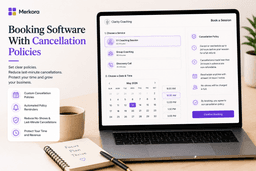
This only works if the booking tool actually supports automatic enforcement — most don't. See: Booking Software With Cancellation Policies.
Why the "awkward conversation" problem is a systems problem
Practitioners who don't enforce their policies usually say the same thing: "I didn't want to damage the relationship." This is a real concern, but it misframes the problem.
When enforcement is automated, there's no conversation to avoid. The client receives a system notification that a fee was charged according to the policy they agreed to. The practitioner doesn't send it. The awkwardness is diffused because the system did what it was configured to do — not because the practitioner made a judgment call.
Most clients, when the enforcement is clear and consistent, don't push back. They reschedule earlier next time. The relationship isn't damaged — it's clarified.
How to transition clients to a new policy
If you've been inconsistent about enforcement, the transition needs to be communicated clearly, not sprung on existing clients. A simple email explaining that you're moving to a booking system that automatically enforces your policy — with 30 days' notice — handles this professionally.
New clients should receive the policy at booking, not buried in a welcome email. Ideally, they confirm they've read it as part of the booking flow.
For specific no-show reduction strategies that go beyond policy, see How to Avoid No-Shows as a Coach or Therapist. For therapist-specific policy templates, see No-Show Policy for Therapists.
The short version
Cancellation policies fail because they depend on practitioner-initiated enforcement in a moment that feels uncomfortable. The fix isn't a better-worded policy — it's a booking system that enforces it automatically. Combined with prepayment and timed reminders, this reduces late cancellations without requiring you to have a difficult conversation every time.
If you want a booking system with automatic cancellation enforcement, Merkora is free to start.
Frequently asked questions
Why do clients ignore cancellation policies?
Usually because the policy was communicated once at signup and forgotten. By the time a client cancels at 11pm, they're not thinking about a policy they read weeks ago. Timed reminders that restate the cancellation window change this.
How do I enforce a cancellation policy without damaging the client relationship?
Automate it. When enforcement is handled by the booking system rather than initiated by you, there's no judgment call to make and no awkward conversation to have. The client receives a system notification. The relationship is preserved.
Should I charge the full session fee or a percentage for late cancellations?
Either works. 50–100% of the session fee is the most common range. The consistency of enforcement matters more than the exact amount. A 50% fee charged every time beats a 100% fee charged occasionally.
How do I tell existing clients I'm switching to automatic cancellation enforcement?
Send one clear email with 30 days' notice: 'Starting [date], my booking system will automatically apply a [fee] for cancellations with less than [X hours] notice.' Most clients respect this. Those who push back were already the problem.