Key Takeaways
- Knowledge monetization is turning what you know — not just the hours you work — into a source of income.
- It's distinct from consulting or coaching by the hour, where income is capped by the time you personally spend.
- In practice, it looks like session packages, courses, digital guides, templates, and group programs — formats that let the same knowledge generate income more than once.
- You don't need a large audience or a formal credential to start — you need knowledge someone has already found valuable enough to ask you for.
- The main barrier isn't the knowledge itself. It's having the infrastructure to package, price, and sell it without rebuilding your operations from scratch.
In this article
A physical therapist spends fifteen years learning how to help people recover from specific injuries. A business consultant spends a decade figuring out what actually makes a small team function. Both have something valuable — and both, for years, have only been able to sell it one hour at a time.
Knowledge monetization is the shift away from that constraint. It's not a new idea, but the tools that make it practical for an independent expert — not just publishers and universities — are relatively new, and most practitioners haven't fully used them yet.
What does knowledge monetization actually mean?
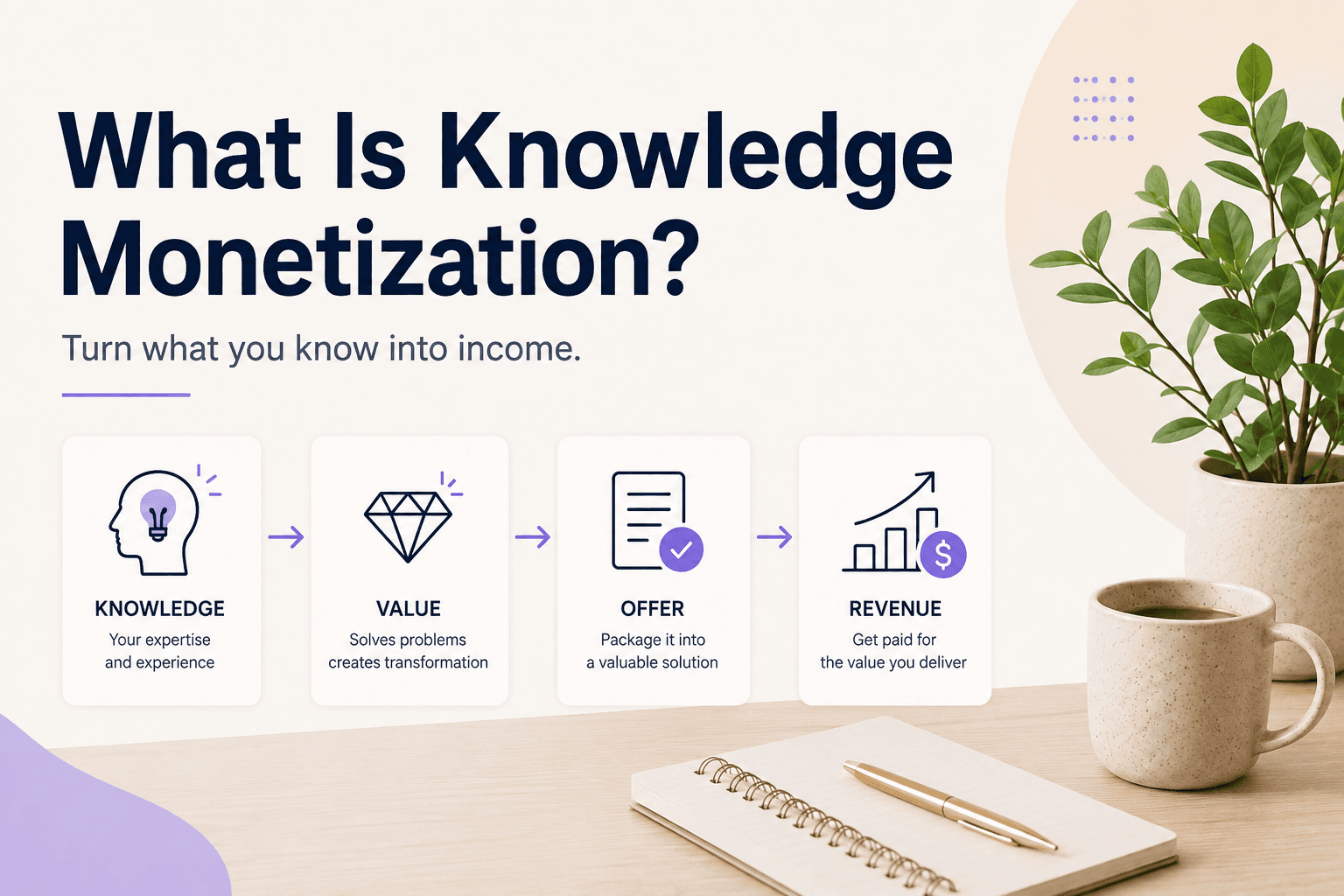
Knowledge monetization means turning what you know into income through products and offers — not just the hours you personally spend delivering it live. That includes session packages, online courses, digital guides, templates, frameworks, and group programs. What connects all of them: the same underlying expertise gets packaged into a form that can be sold more than once, sometimes without you being present at all.
This is different from simply "having a skill." A skill becomes monetized knowledge when it's packaged into something a specific person can buy, use, and get a result from — whether that's a 60-minute session or a self-paced course.
How is this different from just selling your time?
Selling your time has a hard ceiling — your income can only grow as fast as your hourly rate or your hours, both of which are limited. Knowledge monetization adds formats where that ceiling doesn't apply the same way. A course you record once can be purchased by one person or a thousand without you doing additional work for each sale. A digital guide sells on a Tuesday at 2am while you're asleep.
This doesn't mean selling your time stops mattering — session work is often the highest-trust, highest-price offer you have, and it's usually where knowledge monetization businesses start. The point is that it stops being the *only* way your knowledge generates income.
What does knowledge monetization actually look like?
In practice, it takes a small number of recognizable forms:
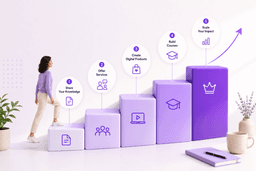
- Session packages — bundles of 1:1 or group sessions sold and delivered over time, rather than booked one at a time
- Online courses — recorded teaching that clients work through at their own pace
- Digital products — guides, templates, workbooks, and frameworks clients use independently
- Group programs — live cohorts or workshops that deliver the same knowledge to multiple people at once
- Membership or ongoing access — recurring access to content, sessions, or a community built around your expertise
Most sustainable knowledge monetization businesses combine two or three of these, not just one. Sessions build trust and generate immediate income; courses and digital products extend that same expertise to people who can't or don't want 1:1 time.
Pro tip
Who is knowledge monetization actually for?
Anyone whose work involves helping people with something they've learned through experience — not just people with a formal course to teach. Coaches and therapists are obvious examples, but so are consultants, tutors, trainers, fitness professionals, and specialists in almost any field where people currently pay for your judgment or your time.
The common thread isn't a specific job title. It's having solved a problem for someone else more than once, in a way you could describe clearly enough for someone else to follow.
What does it actually require to do this well?
Less than most people assume in terms of content, and more than most people assume in terms of infrastructure. You don't need a polished studio or a huge back catalog of content — a clearly packaged offer built from what you already know how to teach is enough to start. What you do need is a way to actually sell it: booking for sessions, checkout for courses and products, and a way to track packages and client history without doing it by hand.
This is the part that stalls most practitioners — not the knowledge itself, but assembling four or five separate tools to package and sell it. For a deeper look at the actual sequence, see the knowledge monetization ladder — sessions, courses, products.
Where to start
Knowledge monetization isn't a separate business from coaching or therapy — it's the natural extension of a coaching software practice once sessions alone stop being the only way you can earn from your expertise. Merkora brings session booking, packages, courses, and digital products into one system, so packaging your knowledge into a new format doesn't mean adding a new tool every time.
Frequently asked questions
What is knowledge monetization?
Knowledge monetization is the practice of turning expertise, skills, or experience into income through products and offers that go beyond hourly work — session packages, courses, digital guides, and group programs are all forms of it.
How is knowledge monetization different from consulting?
Consulting typically bills by the hour or the project — income is capped by the time you spend. Knowledge monetization includes formats like courses and digital products that can generate income without a proportional increase in your time, alongside (not instead of) direct consulting or session work.
Do I need a large audience to monetize my knowledge?
No. Many successful knowledge monetization businesses start and stay small — a few hundred engaged people, or even a personal network, is often enough to sustain real income through sessions, packages, and one well-built course.
What's the easiest way to start monetizing knowledge?
Start with a paid 1:1 session or consultation in your area of expertise. It validates that people will pay before you invest time building a course or a more scalable product, and it teaches you what people actually need.