Key Takeaways
- You don't need a course, a personal brand, or a large audience to start an expertise-based business — you need one person willing to pay for what you already know.
- The fastest path is packaging your expertise as a paid 1:1 session first, then finding the pattern in what clients actually ask for.
- Your first 5–10 clients almost always come from your existing network, not cold marketing — treat that network as your real starting audience.
- Once you can describe your offer in one sentence and have sold it more than once, you have a repeatable business, not a favor you're doing for people you know.
- The infrastructure question — how you book, charge, and deliver — matters far less at the start than getting the first paying client. Don't let tool selection delay step one.
In this article
Most people who want to start an expertise-based business get stuck before they start, because the first decision they make is the wrong one: what platform to build on. They research course tools, compare pricing pages, design a logo — and three weeks later, still haven't sold anything to anyone.
Starting an expertise-based business isn't a platform decision. It's a sequence — and the sequence starts with selling something to one real person, not building the infrastructure for a business you haven't validated yet.
Start with what you already know
You don't need a new skill, a certification, or a niche discovery process — you need to identify what people already ask you for help with. Think about the last six months. Who came to you with a problem, and what did you tell them that actually helped? That's not a coincidence — it's a signal about what you already know well enough to charge for.
Expertise-based businesses fail to launch far more often from overthinking the "what" than from lacking real expertise. Most people underestimate how specific and valuable their working knowledge already is, because it feels obvious to them. It isn't obvious to someone who doesn't have it.
Step 1 — Package it as a single paid session
The fastest way to test an expertise-based business is to sell one focused, paid session before building anything else. Not a course. Not a membership. One session, with a clear outcome, for a price that reflects the value of solving a real problem. This does two things at once: it tells you whether people will actually pay, and it tells you — through the questions they ask — what they actually need, which is often not what you assumed when you started.
Keep the offer narrow. "I'll help you think through your career transition in a 60-minute call" sells better and validates faster than "I offer holistic life and career coaching." Specificity is what makes a stranger picture the exact outcome they'd get.
Step 2 — Sell to people who already trust you
Your first clients come from your existing network, not from marketing to strangers — plan your first ten sales around that reality. Former colleagues, people in communities you're already part of, past clients from other work, friends of friends who've heard what you do. This isn't a lesser way to start — it's the way almost every successful expertise-based business actually starts, whether or not the founder admits it later.
Message people directly. Tell them specifically what you're offering and who it's for. Ask if they know anyone who needs it. This feels less scalable than a marketing funnel, and it is — but it's also dramatically faster, and it teaches you what to say to strangers later, because you'll have real client language to work from.
Step 3 — Turn the pattern into a repeatable offer
Once you've sold the same kind of session more than once, you have a business, not a one-off favor — write down the pattern and formalize it as a real offer. After five or six paid sessions, you'll notice repetition: the same three questions come up, the same framework helps, the same type of person books. That repetition is your actual product, even if you haven't named it yet.
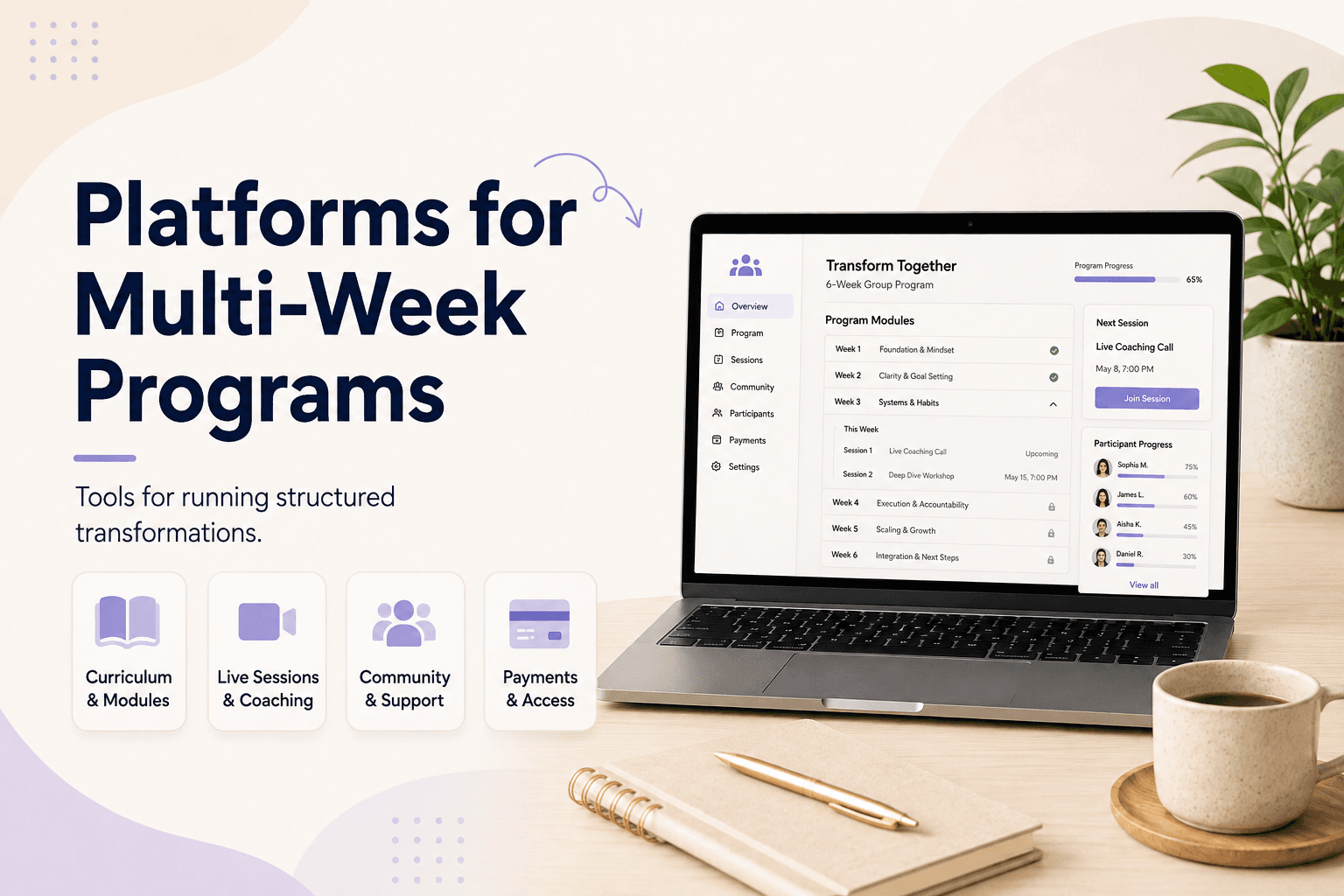
Turn it into something describable in one sentence: who it's for, what problem it solves, and what they walk away with. This is also the point where a session package — a bundle of 3, 5, or 6 sessions — starts to make more sense than one-offs, because you now know the arc a client actually needs to get results.
Pro tip
Step 4 — Add a layer that doesn't require more of your time
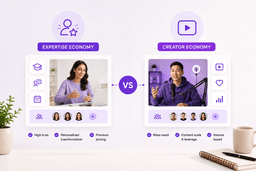
Once your 1:1 offer is proven and consistently selling, add one scalable format — a course, a group program, or a digital product — built from what you already teach repeatedly in sessions. This is where most of the "expertise economy" advice online starts, and it's exactly backwards for someone starting out. Building a course before you've sold any 1:1 sessions means guessing at what people need. Building it after means recording the answer to a question you've already validated dozens of times.
The course or digital product doesn't replace the sessions — it extends your income beyond the hours you personally work, while sessions remain your highest-trust, highest-price offer for clients who want direct access to you.
What infrastructure do you actually need at each stage?
Early on: almost nothing beyond a way to get paid — a simple payment link is enough for your first several clients. As the pattern solidifies, you need real session booking with packages, a way to enforce a cancellation policy without an awkward conversation, and eventually a place to host a course or digital product alongside your sessions.
Don't build the infrastructure before you need it — but don't stay on manual workarounds once you're spending more time on admin than on the work itself. The signal to upgrade is simple: when tracking payments, packages, and bookings by hand starts taking real time away from actually delivering the work, it's time for a system that does it automatically.
Where this leads
This sequence — sell one session, sell it again to your network, formalize the pattern, then add a scalable layer — is how most sustainable coaching software users actually got started, whatever their niche. It's slower to look impressive at the start and faster to actually generate income than building a full platform before your first sale. For more on the shape this takes over time, see what the expertise economy actually is.
When you're ready for the infrastructure layer, Merkora handles session booking, packages, cancellation enforcement, and course hosting in one place — so the operational side doesn't slow down the part of the business that's actually working.
Frequently asked questions
Do I need a large following to start an expertise-based business?
No. Most expertise-based businesses start with a small, trusted network — past colleagues, clients, or connections who already know your work. A following helps later, but it's not a prerequisite to getting your first paying client.
What's the first thing I should sell?
A single paid session or consultation, not a course or a program. Selling one-on-one first lets you validate that people will actually pay before you invest time building something more scalable — and it teaches you what clients really need, which often differs from what you assumed.
How do I know if my expertise is valuable enough to sell?
If someone has ever asked you for advice in your area of knowledge and acted on it, that expertise is sellable. The bar isn't being the world's leading authority — it's knowing more than the person you're helping, in a way that changes what they do next.
What should I build first — a website, a course, or a booking system?
None of them, initially. Start by selling a session directly — through a DM, an email, or a simple payment link — before building any infrastructure. Add a proper booking page and payment system once you've sold to a handful of people and know your offer works.