Key Takeaways
- Follower count measures reach, not revenue — the two are only loosely related for expertise businesses.
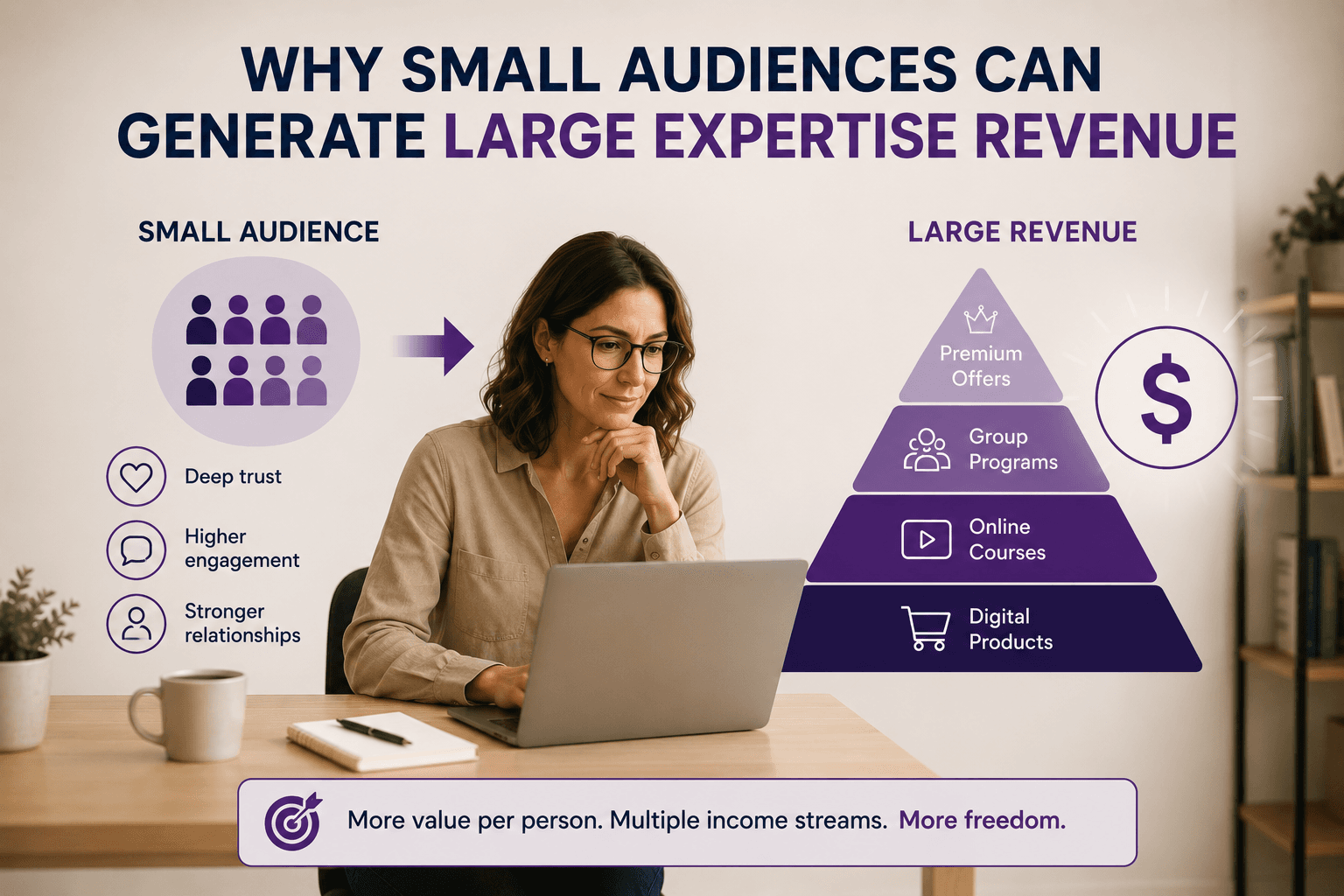
- A committed audience of a few hundred people can out-earn a passive audience of tens of thousands, because expertise income comes from depth of relationship, not impressions.
- The math: a coach with 40 engaged contacts converting a fraction into sessions, packages, and one course can clear five figures a month without ever going viral.
- Large audiences monetize through volume at low margin (ads, affiliate). Small expertise audiences monetize through depth at high margin (sessions, packages, programs).
- You can calculate your own realistic revenue ceiling from the audience you already have — most practitioners have never actually run the numbers.
In this article
A coach with 40,000 Instagram followers is earning less this month than one with a 300-person email list. Not a typo. Not an outlier. This happens constantly in the expertise economy, and it comes down to a single confusion: follower count and revenue are not the same metric, and for expertise businesses, they're barely correlated at all.
Here's the actual math behind why a small, committed audience routinely out-earns a large, passive one — and how to calculate what your own audience, right now, could realistically produce.
Why does follower count mislead practitioners about revenue?
Follower count measures reach. Revenue measures conversion. Expertise businesses live or die on conversion, not reach. A large following built through content is mostly passive — people scrolling, occasionally engaging, rarely in a buying mindset when they see your post.
Typical conversion from a cold social audience into a paying client sits in the fraction of a percent. Even a following of 40,000 might yield a handful of serious inquiries a month, most of whom still need to be nurtured before they buy anything meaningful. Reach without a relationship is a wide, shallow funnel.
What does the real math of a small expertise audience look like?
Compare that to a practitioner with a small, warm audience — past clients, current clients, and a modest list of people who've already expressed real interest. The conversion rate on that audience is often 10–100x higher, because trust is already built.
| Revenue source | From this audience | Monthly revenue |
|---|---|---|
| 1:1 sessions | 15 active clients, avg. 3 sessions/month at $150 | $6,750 |
| Session package | 10 buyers of a 6-session package at $750 (amortized) | $1,875 |
| Self-paced course | 20 buyers/month at $197 | $3,940 |
| Total | From an audience of roughly 300 people | ~$12,565 |
None of that revenue required a viral post or a large following — it required a small group of people who trust the practitioner enough to buy three different things. That's the entire mechanism: depth converts, reach mostly doesn't.
Key takeaway
Why does depth beat reach for expertise businesses?
Large audiences monetize through volume at low margin per person — ad revenue, affiliate commissions, cheap digital products sold at scale. That model needs genuine size to work; a few thousand followers doesn't produce meaningful ad income.
Expertise businesses monetize through depth at high margin per person — a single client relationship can be worth more than 10,000 passive followers combined. One committed client buying sessions, a package, and a course over a year might be worth $3,000–$8,000. Ten thousand followers, absent a direct offer and real trust, might be worth nothing at all.
What does "small but committed" actually look like in numbers?
It's smaller than most practitioners assume. A committed expertise audience is typically:
- Everyone who has ever been a paying client (highest-trust group)
- People who've had a real conversation with you — a discovery call, a consult, a referral introduction
- A small email list of people who've opted in because of something specific you offered
- Direct referrals from existing clients — usually the highest-converting group of all
A practitioner with two years in business, no significant social following, and reasonable client care almost always has 200–500 people in this category without realizing it. That's the audience the math above is built on — not a hypothetical future audience, one that likely already exists.
How do you calculate your own revenue ceiling?
List every past client, current client, warm referral, and engaged contact you have — this is your real, committed audience, regardless of your public follower count. Apply a realistic conversion estimate for sessions, one package tier, and one scalable offer like a course.
Most practitioners who run this exercise for the first time are surprised twice: the number is higher than they assumed, and the audience required to hit it is far smaller than they thought they needed before they could "really" start monetizing.
Turning that small audience into recurring sessions, packages, and course sales requires infrastructure that tracks all three without separate spreadsheets and tools. See how coaching software for small, committed audiences brings sessions, packages, and products into one place.
Frequently asked questions
How many clients do I need to make six figures as a coach or therapist?
Fewer than most people assume. A practitioner serving 25–35 active clients across sessions, packages, and one scalable offer like a course or group program can realistically clear six figures annually — no viral content or large following required.
Do I need a large social media following to build a profitable expertise business?
No. Expertise income comes from depth of relationship and trust, not reach. A practitioner with 300 genuinely engaged contacts — past clients, referrals, a small email list — typically out-earns one with 30,000 passive followers and no direct offer.
What's a realistic revenue estimate for a small, committed audience?
It depends on your offers, but as a reference point: 15 clients in ongoing sessions, 10 buyers of a mid-tier package, and 20 buyers of a self-paced course can combine to produce five figures in monthly revenue from an audience of a few hundred people.
Is a large audience ever useful for an expertise business?
Yes, mainly for discovery and credibility — a bigger reach means more people who might become clients eventually. But reach is a top-of-funnel input, not the thing that converts into revenue. The conversion happens through depth and a clear offer.
How do I calculate my own revenue ceiling with the audience I already have?
List everyone who already trusts you — past clients, current clients, warm referrals, an email list if you have one. Apply a realistic conversion rate for sessions, a package, and one scalable offer. Most practitioners are surprised the number is higher than they assumed, using an audience far smaller than they thought they needed.