Key Takeaways
- Live sessions and passive knowledge products aren't competing strategies — they solve different problems and work best combined.
- Sessions generate immediate, high-trust income but cap out at your available hours. Products generate income independent of your time, but need trust that's usually built in sessions first.
- A simple combined structure: sessions for the highest-touch relationship, a package for commitment, and a product for people not ready for or able to afford 1:1 time.
- The best passive products come from patterns you've already repeated in live sessions — not from guessing what people might want.
- The main obstacle isn't strategy, it's tooling — running sessions and products through separate platforms creates enough friction that most practitioners never combine them well.
In this article
A coach with a full session calendar is often advised to "build a course" as the next step — as if the two were sequential, one replacing the other once you're busy enough. That framing is backwards. Sessions and passive products aren't a ladder you climb and leave behind. They're two different tools that solve two different problems, and the practitioners doing best financially are usually running both at once.
The question isn't which one to choose. It's how to structure them so they support each other instead of competing for the same hours.
Why isn't this actually an either/or decision?
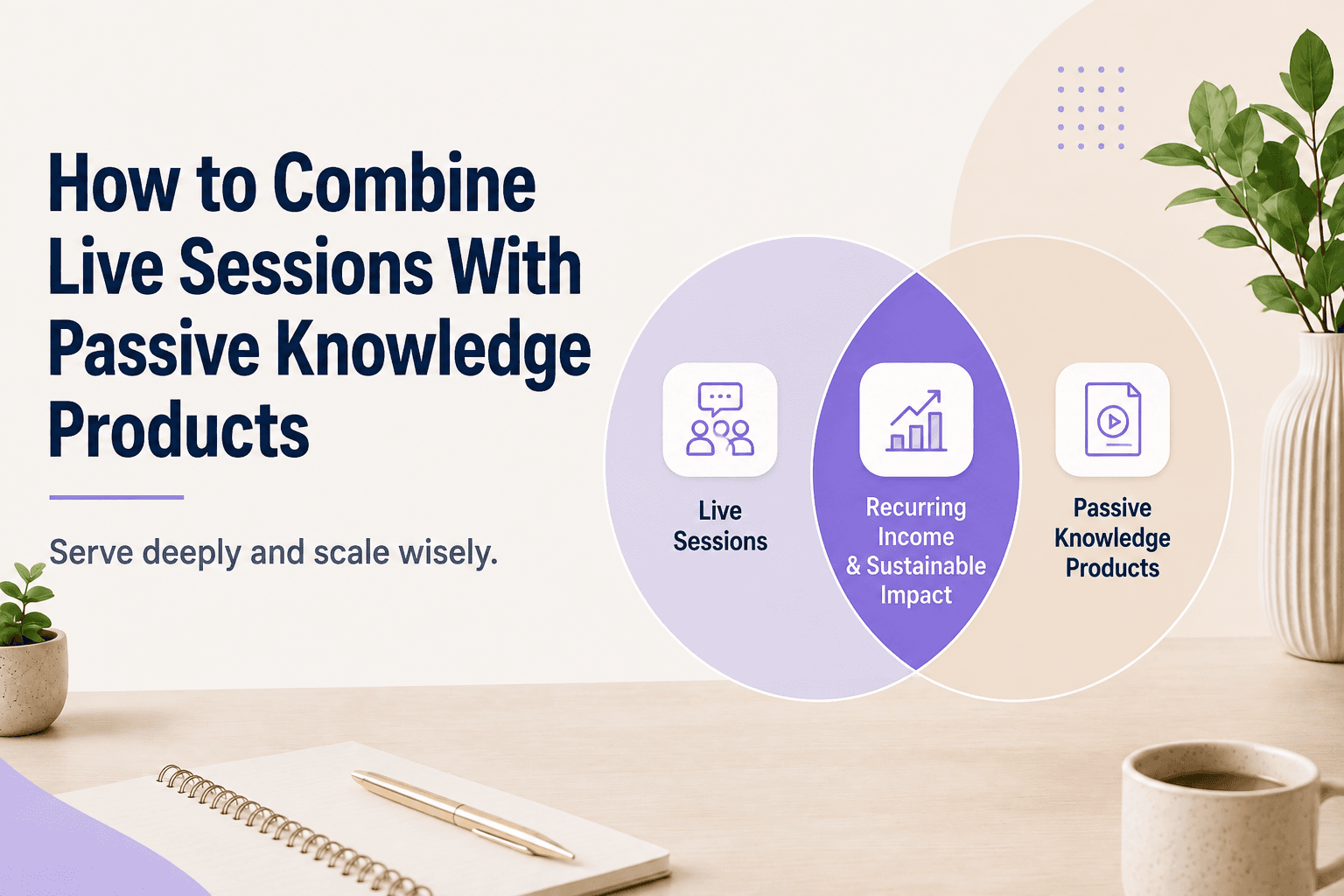
Because live sessions and passive products solve different constraints on your income — one is limited by your time, the other by demand and trust. Sessions cap out because there are only so many hours in a week you can personally show up for. Passive products don't have that ceiling, but they need something sessions naturally provide: proof that what you teach actually works, and trust that a stranger will pay for before ever speaking to you.
Treating these as competing strategies means picking one limitation over the other. Using them together removes both.
What does each format actually do for your income?
Sessions generate immediate, high-trust income and give you direct signal on what clients actually need. Products generate income that doesn't require your ongoing time. Session income is fast and reliable but linear — one more client means one more hour on your calendar, every time. Product income is slower to build and less reliable at first, but it compounds — a course built once keeps selling without additional hours from you.
Neither is strictly "better." A business built only on sessions has an income ceiling. A business built only on products, without the ongoing signal and trust sessions provide, usually struggles to find what's actually worth building in the first place.
Key takeaway
What does a combined structure actually look like?
A pattern that works across most coaching and therapy niches:
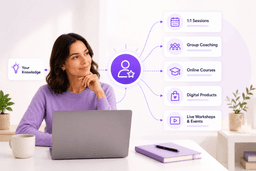
- 1:1 sessions — your highest-price, highest-touch offer, for clients who want direct access to you
- A session package — a bundle of sessions sold upfront, improving retention and cash flow over one-off bookings
- A course or digital guide — built from the material you find yourself repeating in sessions, priced for people who aren't ready for or can't afford 1:1 time
- Optionally, a group program — live, cohort-based delivery of the same core material, sitting between individual sessions and a fully passive product
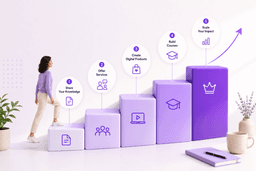
Each tier serves a different type of client, and each one funds the next — session income pays the bills while you build the product; the product then reaches people sessions alone never would.
How do you decide what actually becomes a product?
The best products come from what you've already explained more than once in live sessions — not from guessing what a market might want. If you find yourself giving the same framework, the same three steps, or the same piece of advice to different clients, that repetition is a strong signal: it's common enough to be useful broadly, and specific enough that you already know how to explain it clearly.
This is also the safest way to validate a product idea before investing real time building it — you've effectively already tested it, live, with paying clients, before you ever record a single lesson.
What actually gets in the way of combining these?
Usually tooling, not strategy — running sessions and products through separate platforms turns a simple structure into two disconnected businesses. If your booking lives in Calendly, your course lives in Teachable, and your payments live somewhere else again, you don't have one combined offer — you have three separate systems that happen to be run by the same person. Clients feel this too: someone who bought your course has no visibility into booking a session, and someone who's booked sessions has no easy path to your course.
A single system where sessions, packages, and products share the same client record removes this friction entirely — the client sees one practice, not three logins.
Building the combined offer
If you're earlier in this process and haven't built the session side yet, our guide on how to start an expertise-based business covers that first step. Once sessions are working, adding a product is the natural next move, not a separate business decision.
Coaching software that hosts sessions, packages, and courses together — rather than across separate tools — is what makes this structure sustainable long-term. Merkora keeps sessions and products under one client record, so a client who books a session and one who buys a course are both just... your client.
Frequently asked questions
Should I focus on live sessions or passive products first?
Live sessions first. They validate what people actually need and pay for, and they build the trust that makes a later digital product credible. Building a product before you've run live sessions on the same topic means guessing at demand instead of knowing it.
Will a digital product cannibalize my session income?
Rarely, if positioned correctly. A digital product usually serves people who can't afford or don't want 1:1 time — it expands your reach rather than replacing session clients, who are typically paying for direct access to you specifically.
What's a simple way to structure sessions and a product together?
A common pattern: individual sessions for the highest-touch relationship, a session package for clients ready to commit, and a lower-priced course or digital guide for people earlier in their decision, built from the same core material you already teach live.
What usually stops practitioners from combining the two?
Tooling, more often than strategy. Running sessions through a booking tool and a course through a separate platform means managing two systems, two logins, and no shared view of a client — which makes combining formats feel like running two businesses instead of one.