
Key Takeaways
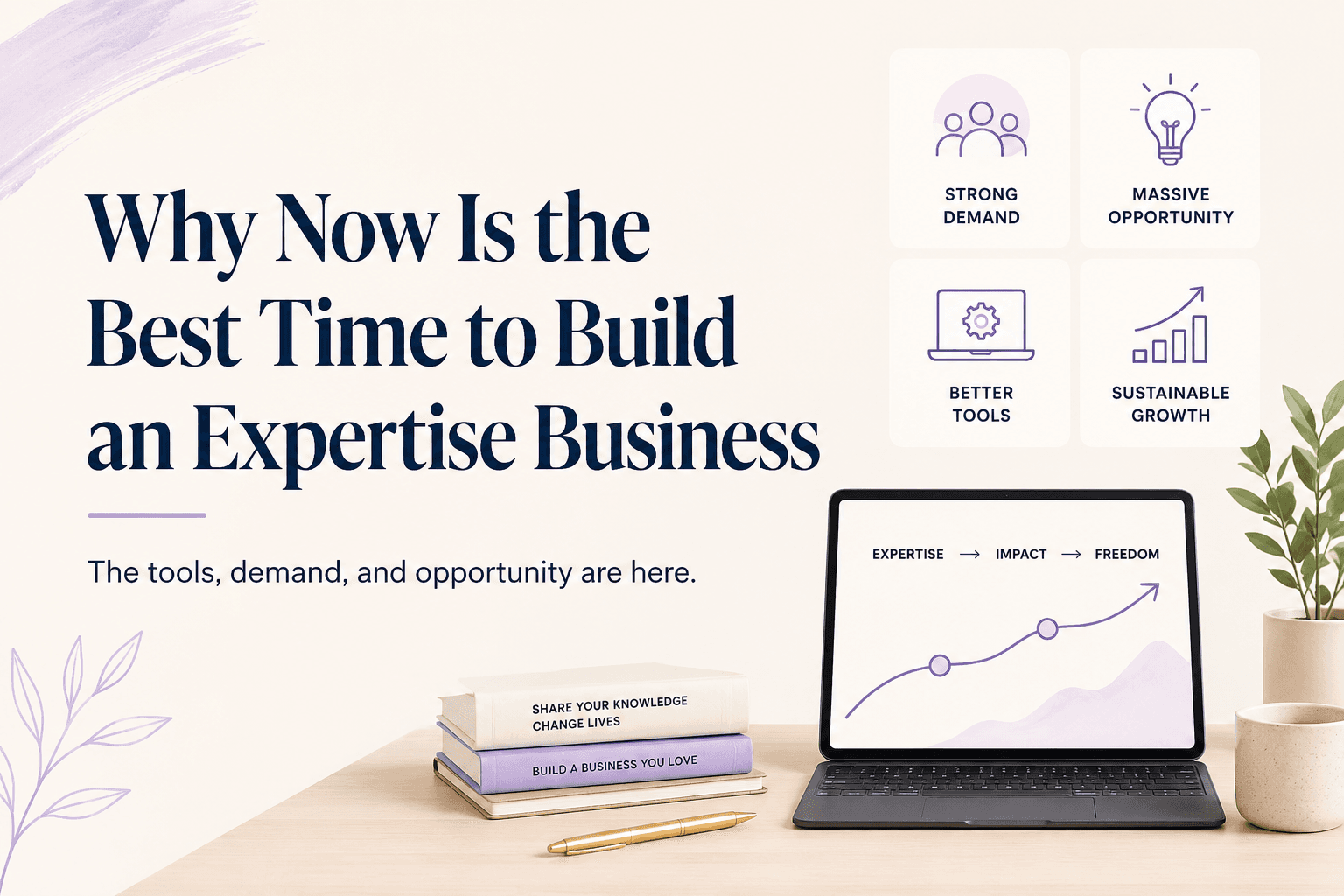
- The technical barrier to selling sessions, courses, and programs as an independent expert has largely disappeared — the infrastructure that used to require a developer now exists off the shelf.
- Buyers are already comfortable paying independent experts directly, instead of only trusting institutions — that behavior shift already happened, it doesn't need to be created.
- Waiting doesn't reduce risk. It mostly means competitors and reference points get more established, and buyer attention gets split more ways.
- Good timing doesn't mean it's now effortless — it means the tooling and market friction that used to block practitioners are no longer the limiting factor.
- The advantage of good timing only pays off if it's used to actually start — the timing itself isn't the business.
In this article
"Now is the best time" is the kind of line that shows up in every era, usually as marketing. It's worth being skeptical of. But in this specific case — independent experts turning knowledge into structured income — there's a real, checkable reason the timing argument holds up.
Two things had to be true at the same time for this to work, and both became true only recently.
The infrastructure gap has closed
Ten years ago, selling sessions, a course, and a live program as one coherent offer meant stitching together a scheduling tool, a payment processor, a video host, and a course platform — or hiring a developer to build something custom. That barrier alone stopped a lot of qualified practitioners from ever starting.
That infrastructure now exists off the shelf, purpose-built for exactly this use case. The technical cost of starting has dropped from "requires a developer" to "requires an afternoon."
Buyers are already used to paying experts directly
The second half of the shift is behavioral, not technical: buyers have already gotten comfortable paying individual experts directly — for a course, a program, a series of sessions — instead of only trusting institutions to deliver the same knowledge. That behavior change already happened. It doesn't need to be created from scratch by any individual practitioner.
This is part of what distinguishes the expertise economy from the creator economy — buyers aren't paying for entertainment or access to a personality. They're paying for a specific, credible transformation, which is exactly what a coach or therapist already offers.
The cost of waiting is not neutral
Waiting feels safe, but it isn't free. The gap between practitioners who've already built structured offers and ones who haven't tends to widen, not narrow, over time — early movers in a given niche become the reference point buyers compare everyone else to.
None of this means a slow start is fatal. It does mean the assumption that "waiting reduces risk" doesn't hold up — most of the risk in this specific timing argument sits on the side of not starting, not the side of starting imperfectly.
What "good timing" doesn't mean
Good timing doesn't mean success is now automatic, or that the work of building a real offer has gotten easier. It means the technical and behavioral barriers that used to block qualified practitioners from even starting are no longer the limiting factor — what happens after you start still depends on the offer itself.
What to do with the timing advantage
The practical implication is straightforward: the barrier to entry that used to justify waiting doesn't exist anymore, so the decision to start or not comes down to the offer itself, not the tooling required to sell it. That's exactly the gap building a business in the expertise economy is meant to close.
Merkora exists because that infrastructure gap closed — booking, payments, courses, and live programs in one platform, so the only thing standing between a practitioner and a real offer is deciding to build it.
Frequently asked questions
Isn't the market for coaches and therapists already saturated?
There are more practitioners than a decade ago, but the market for structured access to a specific expert's knowledge — not saturated in the way generic content is. Specificity, not scarcity, is what determines whether a given expertise business succeeds.
What actually changed to make this a good time?
Two things converged: the infrastructure for selling sessions, courses, and programs became accessible without custom development, and buyers became comfortable paying independent experts directly instead of only trusting large institutions for the same expertise.
Does 'good timing' mean it's easy to succeed now?
No. It means the technical and behavioral barriers that used to stop practitioners from starting are mostly gone. Building a good offer, delivering real value, and being specific about who you serve still take real work.
Is there a real cost to waiting to start?
Yes — mainly in the form of a widening gap between practitioners who've already built structured offers and ones who haven't, and a narrower window before a given niche has an established reference point that isn't you.