Key Takeaways
- An expertise business sells structured access to what you know — sessions, courses, programs — not just content or hourly consulting.
- The starting point isn't a topic, it's a transformation: the specific before-and-after your expertise reliably produces for someone.
- The right first offer is one thing, sold well, not a full catalog of sessions, courses, and products launched at once.
- Booking, payments, and content infrastructure should exist before you need them for a second offer — retrofitting it later is harder than building it in from the start.
- Growth in the expertise economy comes from adding layers to one business, not launching a series of disconnected products.
In this article
"Build a business around your expertise" is easy advice to give and hard advice to act on, mostly because it skips the actual sequence. Sell what? To whom? In what order? Most people who stall out here aren't short on expertise — they're short on a starting structure.
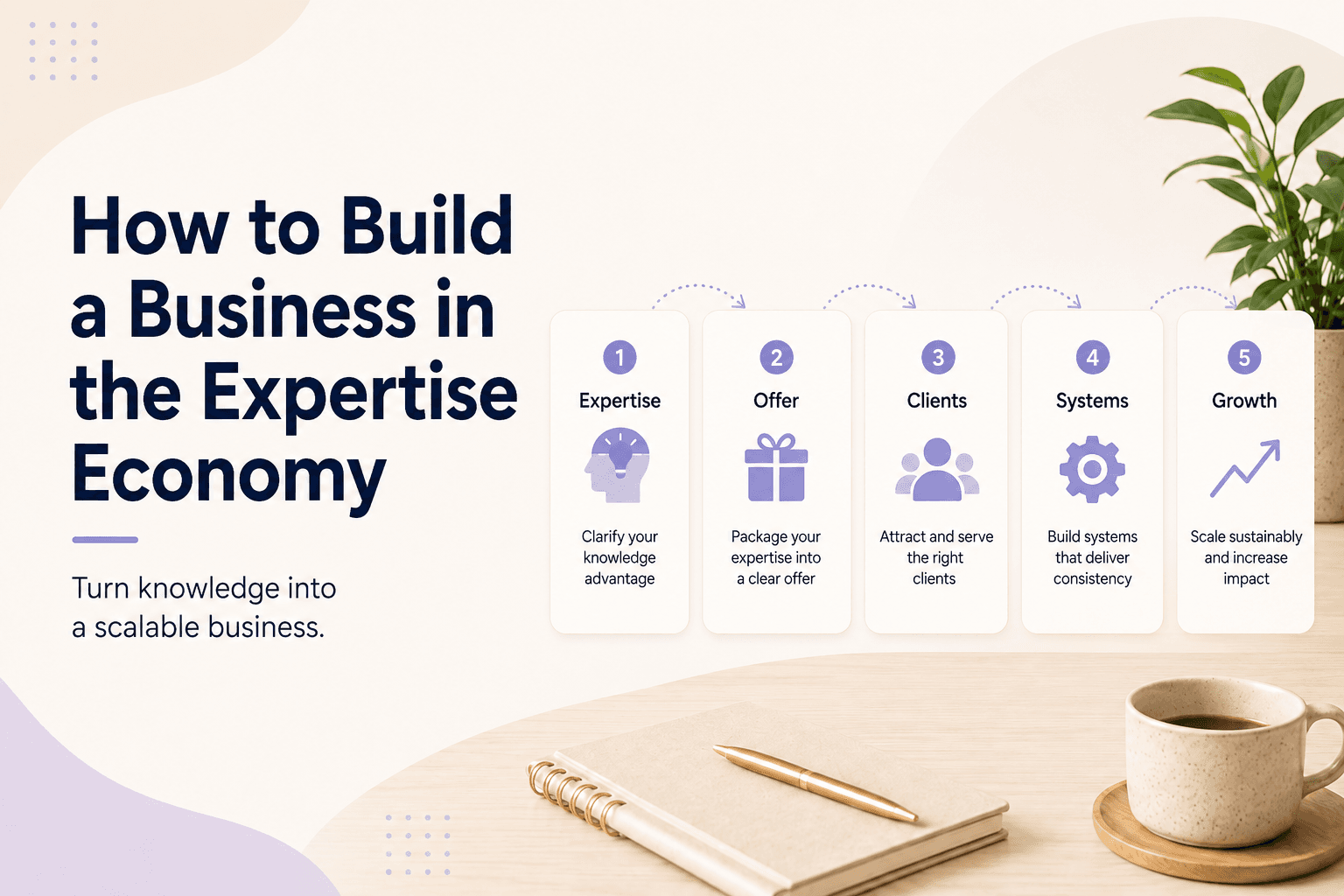
Here's the sequence that actually works, in the order it needs to happen.
What makes this different from a content or consulting business
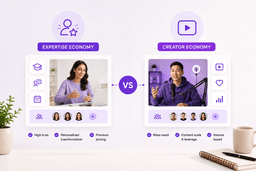
A content business sells attention — audience size is the asset. A consulting business sells your time directly — your calendar is the asset. An expertise economy business sells structured access to what you know, in formats ranging from 1:1 sessions to self-paced products — some of which scale past your personal time entirely.
That distinction matters because it changes what you're actually building. You're not trying to grow an audience or fill more hours. You're trying to build a set of offers that deliver the same transformation in different formats.
Step 1: define the transformation, not the topic
Start with the specific before-and-after your expertise reliably produces for someone — not the general subject you're knowledgeable about. "I know a lot about nutrition" is a topic. "I help new parents get their toddler eating a varied diet within six weeks" is a transformation. Only the second one is sellable as a clear offer.
Everything downstream — your offer, your pricing, your marketing — gets easier once this is specific. Vague topics produce vague offers that are hard for anyone to say yes to.
Step 2: start with one offer, not a full catalog
The instinct when planning a business is to map out the whole structure upfront: sessions, a course, a membership, a certification. Resist it. Start with the single offer you can deliver this week, without building anything new — usually a 1:1 session or a small package.
Pro tip
Step 3: build the infrastructure before you need it
Booking, payments, and a basic client record don't need to be sophisticated on day one, but they need to exist in a form that can grow. Practitioners who cobble together a booking link, a separate payment processor, and a spreadsheet for client notes end up redoing all of it when the second offer arrives.
This is the difference we cover in why solo experts need infrastructure, not just skills — the expertise is rarely the constraint. The plumbing underneath it is.
Step 4: let the business grow in layers
Once the first offer is validated, add the next layer — a package, then a course, then maybe a group program — each one addressing a need you've already seen repeatedly, not a guess about what might sell. This is how starting an expertise-based business actually plays out in practice — one validated layer at a time, not a full launch.
Merkora was built for exactly this sequence — a single platform where the first session, the first package, and the first course all live under one client record, so each new layer is a setting change, not a new system to bolt on.
Frequently asked questions
How is building an expertise business different from freelancing or consulting?
Freelancing and consulting sell your time directly, one client at a time. An expertise business packages what you know into repeatable offers — sessions, courses, programs — some of which don't require your direct time at all, which is what allows it to grow past your calendar.
Do I need a large audience to start?
No. Most successful expertise businesses start with an audience of existing clients or a small, specific niche audience, not a large following. Depth of trust with a small group outperforms reach to a large, unengaged one in the early stage.
What should my first offer be?
The thing you already do well and can deliver without building anything new — usually a 1:1 session or a small package. Build the scalable offer (course, program) second, once you understand what clients actually need from doing the first offer repeatedly.
How long does it take to build a real expertise business?
The first offer can be live within days if it's a session-based service. The layered structure — sessions plus a course plus a program — typically develops over 6-18 months, built one validated offer at a time rather than launched all at once.